Seasonal Gutter Care in Yalaha: Managing Leaves, Needles, and Summer Buildup
Yalaha sits in that familiar Central Florida pattern where a dry spell can flip into a pounding afternoon rain with very little warning. That alone makes gutter maintenance more than a cosmetic chore. Add oak leaves, pine needles, humidity, and storm season, and small clogs turn into real drainage problems fast.
Homeowners often think of gutters as a simple channel nailed to the roof edge. In practice, they are part of a drainage system that has to keep moving, especially through summer. When it does not, the problems usually show up in ways people notice only after the damage starts. Water spills over the front edge. Downspouts dribble instead of discharge. Wet stripes show up on siding. Mulch washes out. In heavier weather, overflow can collect near the foundation line or around walkways where nobody wants slick, muddy runoff.
That is why seasonal gutter care matters so much in Yalaha. The debris here is not just a fall issue. It is a year-round cycle with different materials arriving at different times. Oaks drop leaves and acorns. Pines shed needles steadily. Summer growth and storms add twigs, seed pods, roof grit, and organic sludge that packs into corners and downspouts. Humidity keeps that buildup damp and heavy, which makes it cling harder than many homeowners expect.
What actually lands in Florida gutters
In many parts of the country, people imagine one clean autumn leaf drop and a straightforward cleanup. Florida rarely works that way. Yard debris arrives in waves, and each type behaves differently once it gets wet.
Oak leaves are one of the biggest culprits. They do not always stay crisp and loose. After a few rains, they mat down into a dense layer that blocks water from reaching the outlet. Acorns add another problem. They roll toward downspout openings and create a chunky dam that catches everything else behind them.
Pine needles look harmless until they collect by the handful. Then they weave together like a shallow nest. If you have ever pulled out a compacted strip of wet needles, you know how stubborn they can be. They snag on seams, brackets, and outlet openings. That is one reason homeowners looking into gutter guards for pine needles Florida properties often discover that guard choice matters a lot more than the marketing suggests. A guard that handles broad leaves reasonably well may still struggle when fine, wet needles pile on top or work their way into narrow openings.
Then there is summer buildup, which is often less obvious from the ground. Roof grit, pollen, tiny seed material, and decomposing organic matter can settle into a muddy layer in the trough or downspout elbow. UF/IFAS guidance for stormwater maintenance specifically notes the need to clean gutters and downspouts as needed and remove organic buildup, especially in summer. That lines up with what many Florida homeowners see in real life. The problem is not just visible debris. It is the sludge that slows drainage before the gutter appears full.
Why Yalaha homes need a seasonal approach
Seasonal gutter care works better than occasional emergency cleaning because it matches the local weather. In this part of Florida, the heavy summer rainy season can overwhelm a marginal gutter system in a hurry. A gutter that handles a light shower may fail during one hard storm if leaves and needles have narrowed the flow path.
Storm preparation raises the stakes. UF/IFAS has long advised clearing leaves, needles, and other debris from roofs and gutters ahead of severe weather because those systems can clog during storm prep and storm events. That advice is practical, not dramatic. A gutter does not need to be packed solid to fail when a tropical downpour hits. Sometimes a partial blockage at the downspout opening is enough to send sheets of water over the edge.
Another point that often gets overlooked is where the debris goes next. Leaves, acorns, and organic litter washing out of gutters can move into storm drains and waterways. UF/IFAS also notes that leaf litter and yard debris should be kept out of gutters and storm drains, and that live oak leaves and acorns are a known source of stormwater nutrient pollution in Florida. So cleaning gutters is not just about the house. It is also part of basic responsible runoff management.
A simple habit helps here. Instead of hosing debris into the street or letting it wash away, collect it and use it on site where appropriate. UF/IFAS materials specifically mention using fallen leaves and pine needles as mulch rather than letting them escape into drainage systems. That is one of those low effort changes that solves two problems at once.
The rhythm of buildup through the year
The easiest way to stay ahead of gutter trouble is to stop thinking in terms of one annual cleanup. In Yalaha, the better mindset is maintenance by season and by surrounding trees.
Late winter into spring often reveals what got missed during cooler months. Gutters may still hold old leaf matter tucked under newer debris. Pine needles continue accumulating. Early storms then push that material toward downspouts.
By summer, the issue shifts from volume alone to flow restriction. Frequent rain keeps debris wet, compacted, and heavier. Organic buildup develops faster. This is often when homeowners first notice overflow because summer downpours expose every weakness at once.
Storm season adds urgency. Even a gutter that has been mostly fine can become a problem if it goes into a major weather event half blocked. Downspouts need to be open and ready to discharge. Fasteners need to hold. Water needs a clear route away from the house.
Autumn is still important, but in Central Florida it is not the whole story. If you wait until late fall to think about the gutters, you are already behind.
What to check before summer rains get serious
A quick visual check from the ground is better than doing nothing, but it only tells part of the story. The real trouble tends to gather where water changes direction, especially near downspout outlets, inside corners, and low spots that hold wet debris.
Here are the five things worth checking before the heaviest summer weather settles in:
- Whether water can enter the gutter freely, without mats of leaves or needles blocking the top
- Whether downspout openings are clear, not packed with acorns, sludge, or needle bundles
- Whether any section sags or holds standing water after a rain
- Whether discharge at the bottom moves away cleanly instead of pooling near the house
- Whether fasteners and connections still feel secure after repeated wet and dry cycles
That last point matters more than many people realize. Florida building requirements call for gutters and downspouts to be sized and discharged in accordance with the code, and for exterior gutters and leaders to be made of metal or approved plastic and securely fastened with corrosion resistant fasteners. You do not need to memorize code language to understand the practical takeaway. A gutter system has to be properly attached and able to move water where it is supposed to go. When brackets loosen or joints fail, cleaning alone will not fix the problem.
Leaves, needles, and the difference between a nuisance and a blockage
Not all debris behaves the same way, so the cleanup strategy should match the material.
Broad leaves usually create volume first and blockage second. They fill visible sections, and once soaked they compress into a heavier mat. These are often easiest to remove by hand or scoop, especially when dry enough to lift out in clumps.
Pine needles are more deceptive. They may not make the gutter look full from the ground, but they can still reduce capacity significantly. They tend to drift toward outlet points and cling around hardware. If you have pines nearby, you may need more frequent attention even when the trough does not look dramatic.
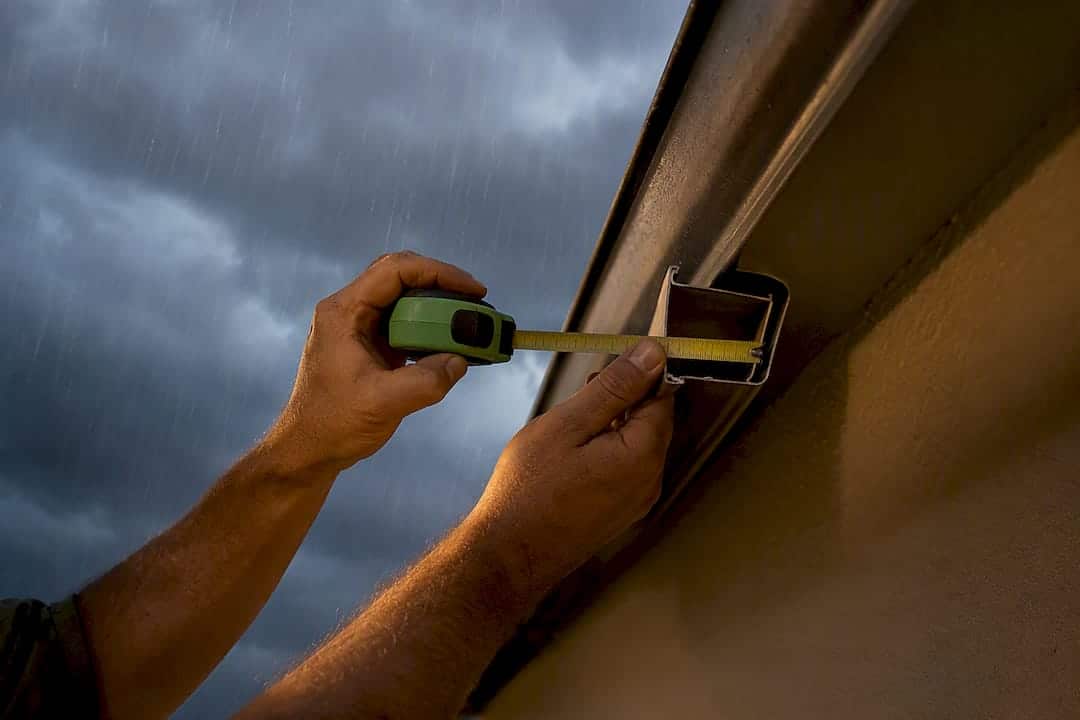
Mixed organic buildup is the messiest category. This is the black or brown muck that forms when small particles break down over time. It is one of the most common reasons a downspout drains slowly even after the large debris is gone. Summer humidity helps create it, and frequent storms keep feeding it.
There is also a judgment call with roofs under dense tree cover. In those cases, one big cleaning may not buy much time. If your roofline consistently sheds into the gutters, it usually makes more sense to set a routine based on what your property actually drops, not what a generic calendar says should happen.
Gutter size and profile matter, but maintenance still wins
Homeowners often ask about gutter sizes for Florida homes after they have already had an overflow event. It is a fair question. Sizing does matter, especially in a climate with intense rain and sudden runoff. But size alone cannot compensate for neglect. A larger gutter still fails if the outlet is blocked by compacted debris.
The same goes for profile choice. K-style gutters Lady Lake FL homeowners often choose are popular across Florida because they offer a familiar look and useful capacity. On many homes, they perform well when properly installed and kept clear. But if leaves and needles are allowed to accumulate, even a well chosen profile loses its advantage.
Material is another factor, though it should be viewed practically. Aluminum gutters Central Florida homeowners commonly install are popular because they are widely used and suitable for exterior applications when properly fastened. Still, no material choice eliminates the need for seasonal care. A sturdy gutter with poor drainage can create the same overflow symptoms as a weaker one.
Seam style gets similar treatment in homeowner conversations. People shopping for seamless gutters Ocala FL contractors advertise often assume “seamless” means “maintenance free.” It does not. Fewer joints can help reduce certain issues, but no gutter is immune to leaves, needles, or organic sludge.
Downspouts do the hard work
A clean trough means very little if the downspout cannot move water out quickly. In many service calls, the visible problem is along the roof edge, but the real choke point sits inside the downspout opening or elbow.
This is where drainage planning matters. Downspout drainage Newberry FL homeowners ask about is the same concern Yalaha homeowners should take seriously: where does the water go after it leaves the roofline? If the answer is “right beside the house,” then even a clean system may underperform during heavy weather. The gutter can only do its job if discharge is directed away effectively.
You do not need to overcomplicate this. The view page goal is straightforward. Water should leave the gutter, travel through the downspout without backing up, and discharge away from the structure rather than saturating the same narrow strip of soil every time it rains.

A small anecdotal reality check here helps. Some homeowners clean the open gutter channel carefully, test it with a hose for thirty seconds, and assume everything is solved. Then the next real storm produces overflow anyway. Why? Because a brief hose test may not reveal a partial clog deeper in the downspout or show how the system behaves under a much higher water load.
When gutter guards help, and when they disappoint
Gutter guards can make sense on some homes, especially where access is difficult or debris load is relentless. But they are not magic, and Florida debris tests them in very specific ways.
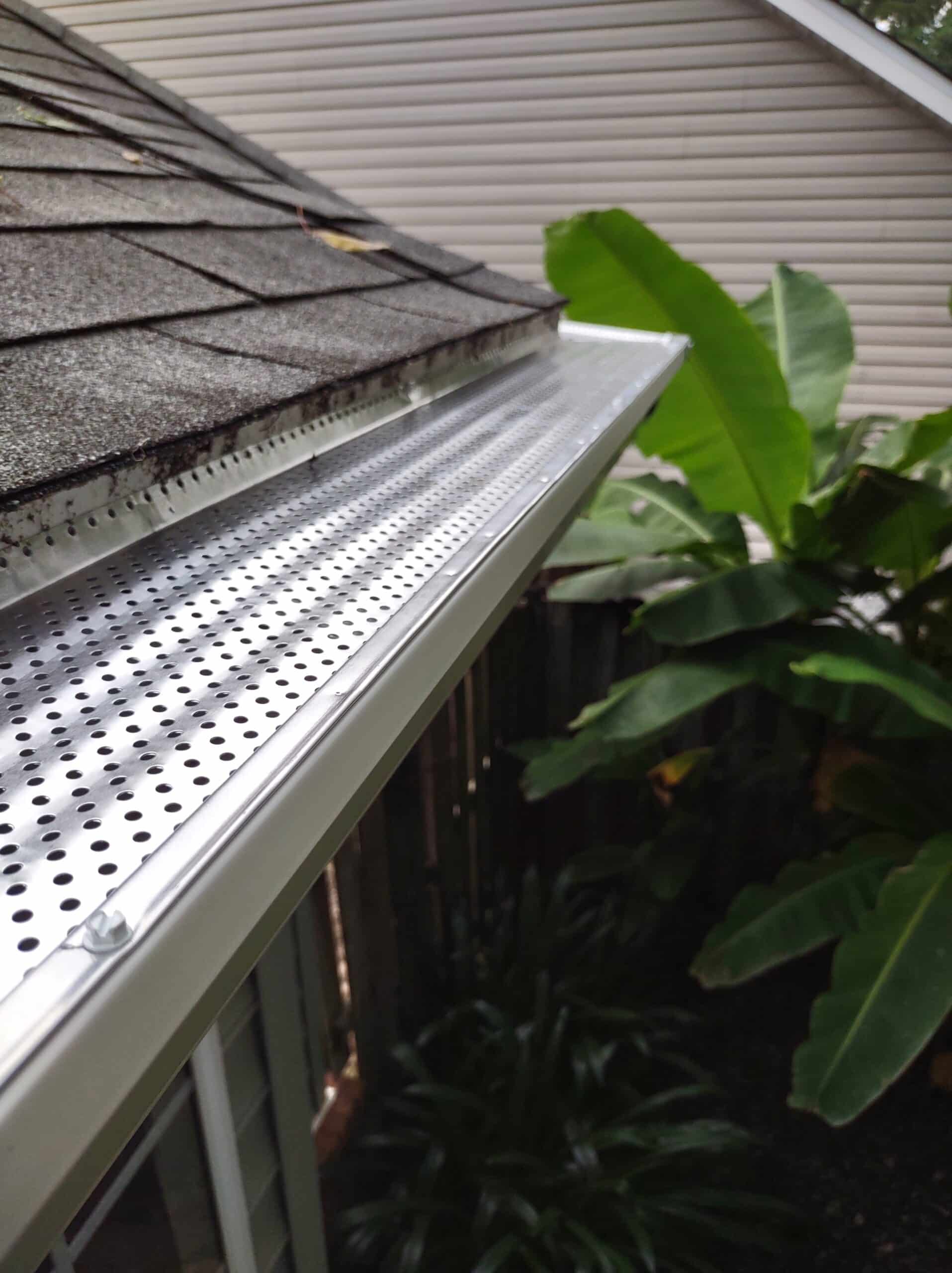
For homes surrounded by pines, the phrase gutter guards for pine needles Florida homes often sounds like the perfect fix. Sometimes guards reduce the volume of debris entering the trough. That can help. But very fine material can still build up over time, and some guard styles allow needles to collect on top, where they then hold moisture and slow intake. Other styles may keep bigger debris out but still need periodic maintenance to clear the surface or exposed openings.
The trade off is simple. Guards can reduce cleaning frequency on the right home, but they rarely eliminate maintenance. If a contractor promises otherwise, I would be cautious. The honest conversation is about reducing labor, not erasing it.
This is also where surrounding trees matter more than marketing claims. A roof line under mixed oak and pine canopy behaves differently from a roof with mostly open sky and occasional leaf drop. One guard system is not automatically right for both.
Repair versus replacement, and how to think clearly about the choice
Not every leaking or overflowing gutter needs replacement. Sometimes the fix is targeted. A loose fastener, a poor slope, a separated joint, or a repeatedly clogged downspout may call for repair first. Homeowners searching gutter repair Wildwood FL services are usually dealing with exactly that kind of problem, where one section has begun to fail but the whole system is not necessarily done.
Other times, replacing piecemeal is false economy. If several runs sag, connections fail repeatedly, or the system no longer handles runoff reliably even after cleaning, then broader replacement becomes easier to justify. That is the kind of conversation people often have when exploring gutter replacement Gainesville FL options after years of patching the same trouble spots.
The decision should be based on performance, not frustration alone. Ask simple questions. Does the system drain well when clean? Are failures isolated or spread across multiple sections? Are fasteners still holding securely? Is water discharging where it should? If the answers are mostly no, replacement starts to make more sense than repeated small repairs.
Storm readiness is not just about the roof edge
When people think about storm ready gutters Florida homes need, they often focus only on whether the trough is empty. Cleanliness is critical, but readiness is broader than that. The entire path matters, from roof edge to downspout discharge point.
A storm ready system should do three things well. It should accept fast runoff, move it without obvious restriction, and discharge it away from vulnerable areas. If one of those steps fails, the whole system falls short.
That is one reason pre-storm maintenance should happen before a weather alert is on the screen. By then, many contractors are booked, conditions are hot and rushed, and small issues are easy to miss. Seasonal care works best when it is boring. The less dramatic it feels, the more effective it usually is.
Signs it is time to call a professional
Many homeowners can spot easy gutter issues from the ground, but some situations are better handled by a qualified contractor. Height, roof pitch, hidden downspout blockages, and fastening problems all change the risk.
These signs usually mean it is time to stop guessing:
- Overflow happens even after recent cleaning
- Gutters pull away from the fascia or appear loose in sections
- Water stains or erosion keep returning in the same places
- Multiple downspouts drain weakly during ordinary rain
- You suspect the system is undersized or poorly routed
That last item is where local judgment really matters. If you are comparing providers for hiring a gutter contractor Florida homeowners can trust, look for someone willing to discuss sizing, discharge, fastening, and maintenance together instead of selling one product as a cure-all. The best conversations are usually plainspoken. They focus on how your home sheds water, what debris your lot produces, and what level of upkeep you can realistically keep up with.
A better way to handle the debris after cleaning
One of the easiest habits to improve is what happens after you clean. Too many people push the debris into the driveway edge or street, where the next rain simply carries it into drains. That works against the whole purpose.
Leaves and pine needles can often be reused on site as mulch in appropriate landscape areas, which aligns with UF/IFAS guidance. Even if you do not reuse every bit, the key is to collect and contain the material rather than washing it away. This is one of those quiet maintenance details that helps both your property and the larger drainage system around it.
It also keeps the cleanup from circling back. Debris left near the house has a habit of finding its way back into the gutters, especially around corners and splash zones.
Keeping expectations realistic
Good gutter care in Yalaha is not about chasing perfection. If you live under mature trees, you are not going to “win” by cleaning once and forgetting the system for a year. The realistic goal is steady function through changing seasons.
That means noticing patterns. Maybe one valley fills first every time. Maybe the rear downspout runs slower than the others. Maybe needles gather on one roof edge because of prevailing wind and tree placement. Once you learn those habits of the house, maintenance gets easier and more effective.
It also helps to let go of one common myth, which is that a newer system automatically solves an old maintenance problem. New gutters can improve capacity and attachment, yes. But leaves still fall, needles still collect, and summer buildup still forms. Whether you are considering gutter cleaning Fruitland Park FL companies, asking about seamless gutters Ocala FL installers, or pricing gutter replacement Gainesville FL services, the lasting value comes from pairing the right system with realistic upkeep.
For most Yalaha homeowners, that is the sweet spot. Keep gutters clear before heavy summer rains. Check downspouts, not just the open trough. Take storm season seriously. Reuse or properly collect organic debris instead of letting it wash away. And if the system keeps struggling when it is clean, get a professional opinion before the next hard rain makes the decision for you.