What Type of Gutter Guards Make Sense for The Villages FL Homes Surrounded by Trees
If you live in The Villages and your lot is ringed with oaks, pines, or a mix of mature shade trees, your gutters are dealing with a very specific kind of Florida stress. It is not just rain. It is rain plus leaf litter, acorns, pine needles, twigs, and the sticky, damp conditions that turn a small clog into a heavy, waterlogged mess faster than many homeowners expect.
That matters more here than it might in a drier climate. Central and North Florida get frequent warm season thunderstorms, high humidity, and a long wet season pattern. Summer rain is often driven by sea breezes and tropical moisture, which means downpours can arrive hard and fast. Heavy rainfall from thunderstorms and tropical disturbances is a recurring issue in Florida’s warm months, so whatever is sitting in your gutters usually does not stay harmless for long.

For homes surrounded by trees, the question is not whether you need to think about gutter protection. The real question is what kind of guard actually makes sense for your roofline, your tree cover, and the amount of cleanup you are trying to avoid.
Why tree-heavy homes in The Villages are tricky
A clean gutter on a dry day can look perfectly fine, then fail during the next storm because of what has built up just below the surface. I have seen gutters hold leaves well enough through a calm week, then overflow once those leaves get packed down by a typical Florida rain. Debris changes character when it gets wet. Oak leaves flatten. Pine needles weave together. Small limbs catch crossways. Acorns wedge into corners and downspouts.
That is why tree-heavy homes need a different level of judgment than a house with a few ornamental trees and open sky above the roof. A guard that performs reasonably well on one property can become a maintenance headache on another.
Florida landscaping also adds a second concern. When plant debris washes into runoff paths, it can clog drainage and add nutrients to waterways. So this is not only about keeping fascia boards cleaner or avoiding drips over the front walkway. Good gutter performance helps keep water moving where it should.
For homeowners comparing gutters The Villages FL contractors install with various guard systems, the best answer is usually the one that balances debris shedding with realistic maintenance. There is no truly maintenance-free system in a heavily wooded Florida setting. Anyone promising zero upkeep is overselling.
The main guard styles homeowners usually consider
Most homeowners end up hearing about the same handful of guard types. Brush inserts, foam inserts, basic mesh or screen guards, finer micro-mesh products, PVC-style covers, and reverse-curve designs all come up in the conversation. On paper, several of them sound similar. In practice, they behave very differently once pine needles and wet leaf fragments enter the picture.
The biggest mistake I see is choosing a product based on the idea of “blocking leaves” without thinking about the actual debris falling from local trees. A broad maple leaf in a brochure is one thing. Florida live oak leaves, acorns, pine needles, and small twigs are another. UF and IFAS guidance notes that live oak leaves and acorns commonly build up in streets and gutters, and pine needles, leaves, and small limbs are common debris as well. That lines up with what homeowners in Central Florida already know from cleaning their driveways and lanais.
So when you evaluate guards, ask a sharper question: will this system keep out the small, messy stuff, or will it just hide it?
What usually works best around oaks and pines
For homes in The Villages surrounded by trees, fine mesh and micro-mesh guards generally make the most sense to investigate first. That is because they are designed to keep out smaller debris than wide-opening screens. If your roof sheds mostly large leaves and not much else, a basic screen might be enough. But that is not the usual tree mix on many Florida lots.
Pine needles are often the deciding factor. They slide, clump, and work their way into openings that seem small enough until a storm proves otherwise. Oak litter creates a different problem. The leaves can mat over surfaces, and acorns can bounce, roll, and collect at transitions or valleys where water volume is already higher.
A finer mesh design tends to do a better job of preventing those smaller materials from entering the gutter trough in the first place. That does not eliminate maintenance. Debris can still accumulate on top, and heavy rain can pin wet material against the surface. But maintenance shifts from digging out soggy gutter interiors to brushing or blowing off the guard surface and checking problem spots.
Reverse-curve systems can also appeal to homeowners because they are built to let water wrap into the gutter while encouraging debris to fall away. On some roofs, they perform well. On heavily treed properties, though, their success depends a lot on the debris type and the roof edge conditions. Small debris may still become an issue, and the more complicated the shape, the more important correct installation becomes.
By contrast, brush and foam insert guards usually make less sense for tree-heavy homes in this region. They may seem affordable at first, but both can become collection points for damp organic matter. In a humid climate with frequent thunderstorms, that is not a trade-off many homeowners enjoy for long. Instead of keeping debris out of the gutter system, they can end up holding it in place.
The styles, in plain language
Here is the short version most homeowners actually need:
- Fine mesh or micro-mesh tends to be the strongest candidate for homes under oaks and pines because it addresses smaller debris better than wide screens.
- Basic mesh or screen guards can work when debris loads are moderate, but they are less convincing where pine needles are constant.
- Reverse-curve covers may be worth considering on the right home, but they need proper fit and are not automatically the best answer for every tree canopy.
- Foam and brush inserts are usually a tougher sell in Florida humidity when trees drop debris year-round.
- Any system still needs inspection, especially before and during the rainy season.
That short list saves homeowners from the common trap of comparing products as if all “gutter guards Gainesville FL” or “gutter guard installation Central Florida” options are basically interchangeable. They are not.
Why seamless gutters still matter even when guards are installed
Homeowners sometimes focus so much on the guard that they forget the gutter itself has to do the hard work. A guard cannot fix poor pitch, undersized troughs, weak fastening, or old sections that leak at joints.
This is where seamless systems often enter the conversation. With fewer joints, there are fewer places for leaks to develop over time. That is one reason homeowners looking into seamless gutter installation Leesburg FL or seamless gutters Gainesville FL often pair that upgrade with a guard system instead of treating them as separate projects.
The logic is simple. If your existing gutters are sagging, leaking, or pulling away from the fascia, adding guards on top may only hide those issues for a while. In some cases, it is smarter to address the whole system, then install a guard that suits the property’s debris pattern.
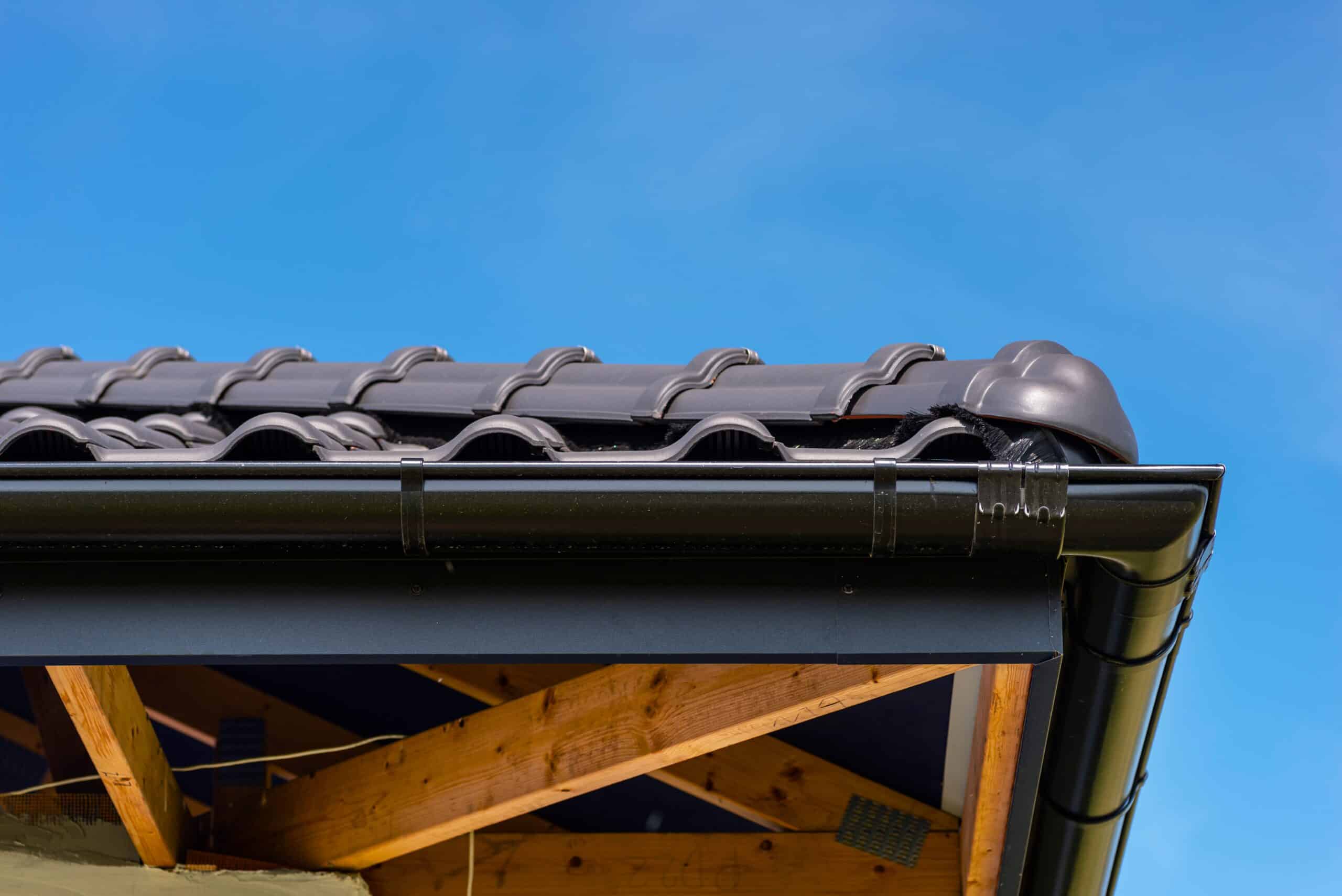
For a tree-covered home in The Villages, that can be the difference between a setup that manages Florida rain and one that simply looks tidy until the next hard gutter company in Gainesville storm.
Where even good guards can struggle
No guard type performs perfectly everywhere on the same house. A lot depends on roof geometry and the way trees overhang it.
Valleys are one of the first places I watch. They concentrate water flow and often funnel debris into the same stretch of gutter. If a home has mature oak limbs over a valley, that section may need more frequent inspection no matter what guard is installed.
Downspout openings are another trouble spot. If debris gets past the guard or collects at transitions, the clog often shows up where water is trying to move vertically. Homeowners then assume the whole system failed, when the problem may actually be isolated to one outlet.
I also pay attention to roof edges below pines. Needles can stack in thin layers, and those layers change how water flows across the guard surface. Sometimes the issue is not that the guard allowed debris inside. It is that the debris on top slowed water enough to encourage spillover during a heavy burst of rain.
Florida storms expose weak points quickly. A guard that looks clean in the morning can still struggle in a fast afternoon downpour if the roof above it has been dropping fine debris for weeks.
Humidity changes the maintenance equation
Dry climates let debris stay light and crisp for a while. Central Florida does not. Here, organic material often gets damp, stays damp, then decomposes right where it lands. That changes how often a homeowner should check the system and what style of guard makes sense.
Foam inserts are the clearest example of this trade-off. They can seem neat and simple at first, but once they are surrounded by moisture and plant debris, they stop feeling low maintenance. Brush-style inserts run into a similar problem. The debris may not wash cleanly away. It can collect within the insert itself.
Fine mesh and micro-mesh are not immune to Florida humidity, but they usually keep the mess more exposed. That is a practical advantage. You can see what is happening. Surface debris can often be removed more easily than debris lodged down inside the gutter trough.
That visibility matters for gutter maintenance Florida homeowners can keep up with realistically. A system that hides buildup is often more frustrating than one that reveals it early.
Repair history should guide the guard choice
If your home already has a history of overflow, staining, pulled fasteners, or recurring cleanouts, that history should shape the decision. A good gutter contractor Central Florida homeowners trust will ask what problems you have had, not just what product you want.
For example, if a section has already needed gutter repair Gainesville FL style service on another property with similar weather exposure, there is a lesson there. Maybe the issue was not the lack of guards. Maybe the pitch was off. Maybe water volume from a roof valley was too high for the current setup. Maybe the debris pattern requires a finer opening size than standard screens provide.
The same goes for homes that need frequent gutter cleaning Leesburg FL or gutter cleaning and repair Ocala FL service because debris keeps packing into the same corners. Repeated maintenance calls often reveal a pattern. Once you understand the pattern, the right guard choice becomes clearer.
A homeowner might say, “I just want to stop cleaning my gutters.” Fair enough. But the better question is, “What exactly am I cleaning out, and where does it collect?” Leaves only? Needles too? Acorns? Small twigs after every storm? The answer changes the recommendation.
What I would tell a homeowner standing under the trees
If I were walking a tree-heavy property in The Villages with a homeowner, I would start with the canopy. Are the branches mostly oak, mostly pine, or mixed? Do they overhang the roof directly or drop debris nearby that still blows onto the house? Then I would look at the gutter condition itself. Are the sections sound? Are they seamless or pieced together? Is there evidence of overflow behind the gutter, not just over the front edge?
Only after that would I narrow down the guard type.
On many homes, the practical answer would be a well-installed fine mesh or micro-mesh system paired with a check of pitch, fasteners, and downspout flow. Not because it is fashionable, but because it usually gives the best shot at handling small Florida debris without turning the gutter interior into a hidden compost bed.
On a house with lighter tree cover and mostly broad leaves, a standard mesh screen might be good enough. I would not automatically push a more elaborate system if the property does not need it.
On a house buried in pine litter, I would be cautious about anything with wider openings or anything that asks the gutter to hold organic material inside an insert.
That kind of judgment is why local experience matters. Gutter installation North Florida and Central Florida work is not just about hanging metal straight. It is about understanding what regional weather and vegetation do to drainage systems over time.
A few warning signs that your current setup is not coping well
Homeowners often notice the symptoms before they understand the cause. If you see water spilling over the gutter edge during a storm, dark streaks on the fascia, plant growth in the trough, or puddling below one section of roofline, your current setup probably needs attention. If you hear water hammering into an overflowing corner while the downspout stays strangely quiet, there may be a blockage or a flow restriction.
None of those signs automatically mean you need guards. Sometimes you need cleaning. Sometimes you need repair. Sometimes the better long-term move is replacing worn sections with a seamless system and then adding guards suited to the debris load.
That is why homeowners researching seamless gutter installation Leesburg FL, seamless gutters Gainesville FL, or gutters The Villages FL service should think in terms of the whole assembly, not just the accessory on top.
The smartest expectation to have
The right gutter guard should reduce maintenance, lower the chance of clogs, and help the system perform better in Florida rain. It should not be expected to erase maintenance forever. Tree-covered homes simply produce too much debris for that promise to be believable.
Still, there is a big difference between climbing a ladder to pull out compacted sludge several times a year and making occasional checks to clear surface buildup from a properly selected guard. That is the improvement most homeowners are really after, and it is a realistic one.
If your home in The Villages sits under mature trees, the safest default is to evaluate fine mesh or micro-mesh options first, make sure the gutters themselves are in good shape, and choose installation quality over marketing language. In this climate, with this kind of tree debris, that combination usually makes the most practical sense.
A guard is not magic. It is a filter in a stormwater system. The better it matches your trees, your roof, and Florida’s heavy rain pattern, the better your gutters will hold up when the sky opens and the real test begins.